


The commercial banks ended the 2023/24 fiscal year with numbers that sparkle at first glance. Aggregate profits rose, margins stayed plump, and system-wide non-performing loans (NPLs) held in the low single digits.

The commercial banks ended the 2023/24 fiscal year with numbers that sparkle at first glance. Aggregate profits rose, margins stayed plump, and system-wide non-performing loans (NPLs) held in the low single digits.
However, when asset growth, capital cushions, and loan-loss provisions are weighed beside earnings, the tidy league table starts to wobble and a quiet change in hierarchy appears.
The Commercial Bank of Ethiopia (CBE), the state-owned and still immense financial institution, remains the benchmark. It posted a two-percent return on assets, a 30pc net margin, and a 15pc jump in its balance sheet. Its loan-to-deposit ratio was 80pc and management provisioned conservatively. Awash Bank, the private-sector flag-bearer, earned 2.8pc on assets and booked a 25pc margin while keeping risk within prudential lines.
Together, these banks control more than half of all banking assets and loans. Any upset in agriculture, manufacturing, real estate, or trade would rattle the whole system.
Below this commanding duo the order shifts. Goh Betoch and Tsehay banks looked modest on net income yet soared when capital strength and prudence are counted. High capital-to-asset ratios, minimal provisioning costs, and measured deposit growth left them sturdier than some headline leaders.
Their position signalled that in an economy wrestling with hard-currency shortages, double-digit inflation, and tougher regulation, the ability to absorb shocks may soon matter more than the ability to print profits.
Credit risk is the first red flag. Industry NPL ratios floated between two and five percent, but the Development Bank of Ethiopia’s (DBE), a state policy bank, carried arrears above 30pc. Newcomers such as Amhara Bank and Tsehay Bank have enlarged assets and deposits by more than 200pc, yet provision at only one and two percent. If defaults revert to historic norms, those cushions could disappear quickly.
The Bank of Abyssinia’s (BoA) loan-to-deposit ratio was 92pc, leaving it thinly liquid. Amhara Bank has built 542 outlets yet attracted an average of 190 million Br in deposits per branch, a mismatch that will bite if customers fail to follow bricks and mortar.
Capital adequacy is the next fault line. Most established lenders operated on asset-to-equity multiples of eight to 12 and keep capital-to-asset ratios barely above the six-to-eight-percent regulatory floor. One macro shock or a spike in provisions could erase those buffers inside a single quarter.
Siinqee and Tsedey banks, by contrast, hold capital exceeding 15pc of assets and leverage of only three to eight times. The trade-off was thinner profitability, and equity accretion may stall while larger rivals top up capital with subordinated debt. The National Bank of Ethiopia (NBE) may lift the minimum capital-to-asset ratio to 10pc by 2027, a move likely to push under-capitalised midsize banks to merge or raise funds on harsher terms.
Liquidity numbers also warranted caution. Most big names sat between 60pc and 80pc loans-to-deposits, yet net interest still supplied up to 80pc of revenue. If deposit rates climb faster than lending yields, an odds-on bet while inflation lingers between 20pc and 30pc as the IMF projected, spreads will narrow, and funding gaps could reopen.
Interest-free banks such as ZamZam and Hijra dodged rate swings but will likely face trouble if profit-sharing pools disappoint.
Across the industry, wages already absorbed 40pc to 50pc of operating expenses and administrative costs another 10pc to 20pc. Without a digital leap, those cost-to-income ratios will harden as fee-hungry fintech rivals gain ground. Observers note that even small dips in cost-to-income ratios will release resources for lending and technology upgrades, a dividend to outweigh the headline savings.
The next five years will decide winners and laggards. Consolidation leads the list. Between 2026 and 2028, mergers could cut the number of banks by 10pc to 15pc, lifting profits per employee and deposits per branch for those left standing. Digital adoption is the second catalyst. Mobile banking penetration is tipped to reach 50pc by 2028; swapping bricks for bits could trim administrative and staff bills by roughly 15pc.
Credit-risk sophistication will be the third driver. Advanced scoring models and industry-wide stress tests, due in 2026, should sharpen loan pricing and capital allocation. Early moves to securitise mortgage pools promise to lighten concentration risk. Interest-free banking is the fastest-growing frontier. Retail and small-business niches are projected to expand 30pc to 40pc a year, nudging conventional lenders to open Sharia-compliant windows as a dedicated rule book lands in 2026.
Early experiments in bundling mortgages into securities have already trimmed single-bank exposure to Addis Abeba’s volatile property market and provincial towns alike.
Lastly, macro-prudential oversight is tightening. Counter-cyclical capital buffers and a de-facto 85pc cap on loan-to-deposit ratios, based on Basil III, will punish banks that lean too hard on short-term funding. Stress-test results published for the first time in mid-2025 have already shone a light on weak capital and provisioning practices.
Last year’s aggregate performance has shown that a two-percent return on assets can sit beside sound liquidity and capital discipline, while a bank flaunting double-digit asset growth can hover near regulatory minima. Over the coming decade, leadership will belong to lenders that turn near-term earnings into thicker buffers, smarter risk models, and leaner cost structures.
Ethiopia’s banks have built impressive franchises under tough conditions, but the comfort of rising profits risks breeding complacency. Investors, depositors, and regulators should reward institutions that reinforce their shock absorbers now rather than celebrate those that merely print the biggest numbers.
Earnings alone will not protect the industry from the gathering storms.
Experience the full story in our exclusive digital edition. Addis Fortune Finance – Volume 2 takes you inside the defining moments of Ethiopia’s banking year. From record-breaking profits to emerging risks, this issue offers in-depth analysis, data-driven insights, and expert commentary.
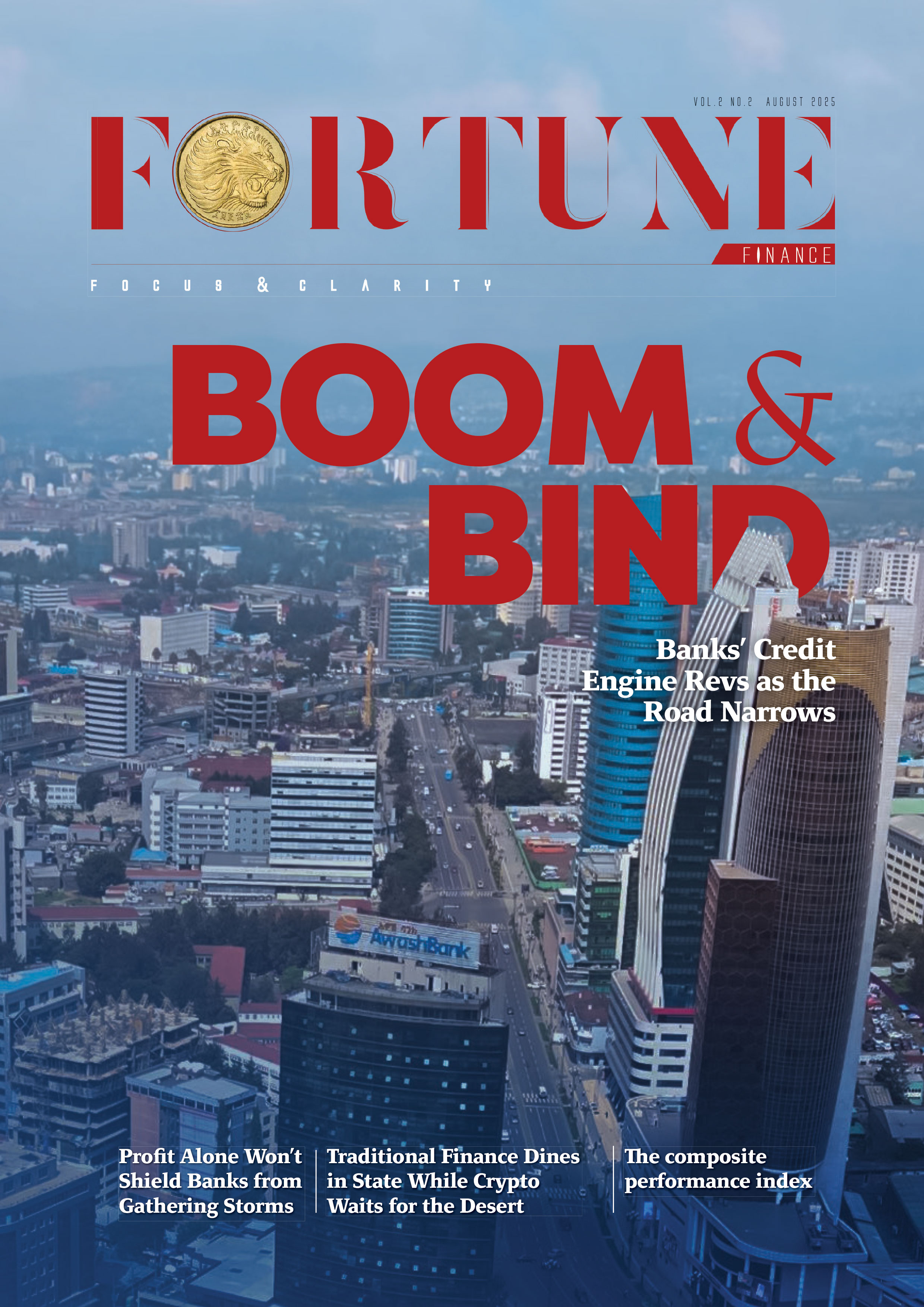
Addis Fortune Finance | Focus & Clarity
© 2024 - 2026 Independent News & Media PLC All Rights Reserved.