addis-fortune-finance

Our Social Network

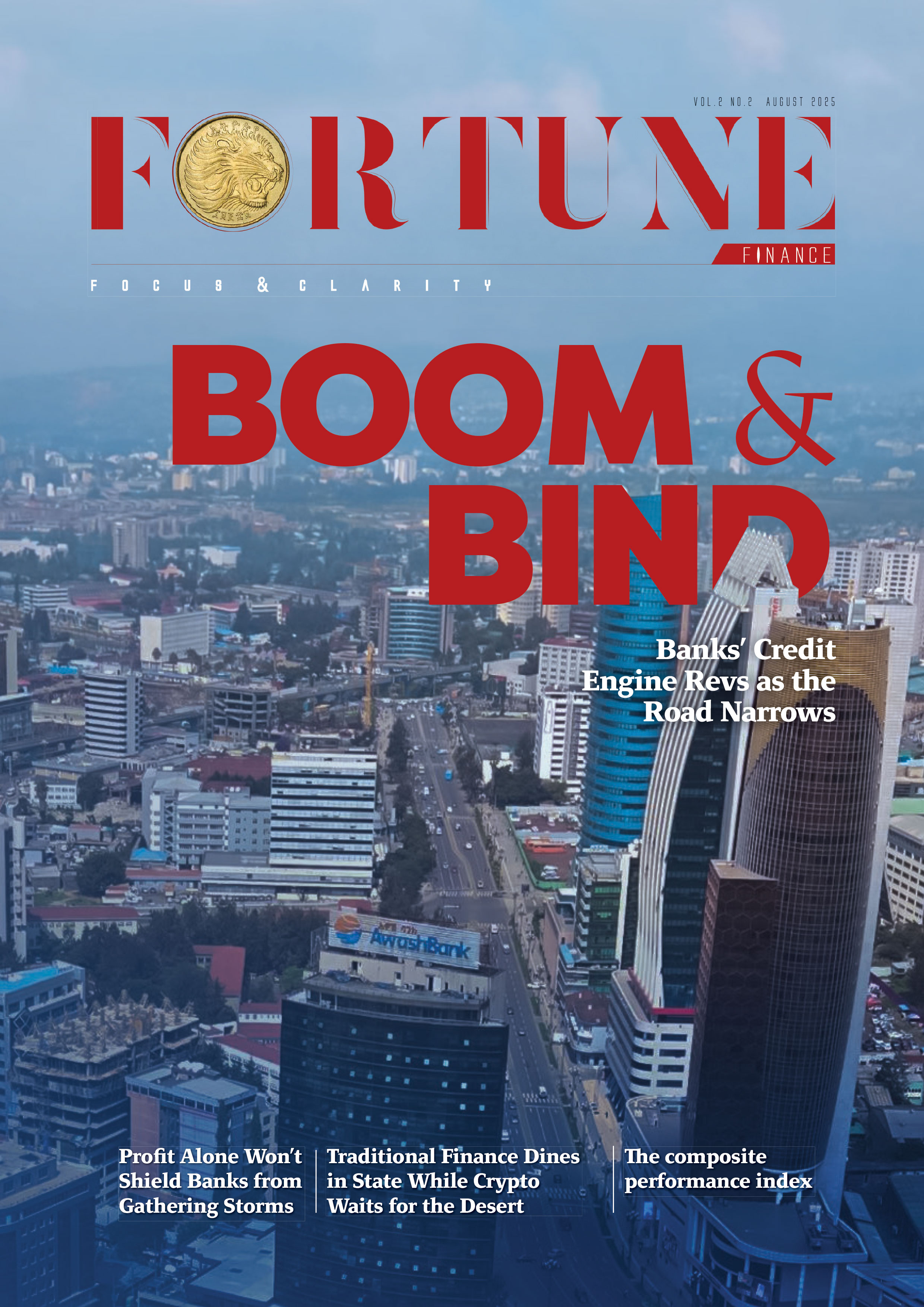
Traditional Finance Dines in State While Crypto Waits for the Desert

A decade ago, Bitcoin and Ethereum lingered on the fringes of finance, curiosities traded by hobbyists and techno-utopians. Today, their combined market value stretches into the trillions of dollars, and their ascent has ignited a fresh argument. Will digital tokens replace traditional assets or sim...

A decade ago, Bitcoin and Ethereum lingered on the fringes of finance, curiosities traded by hobbyists and techno-utopians. Today, their combined market value stretches into the trillions of dollars, and their ascent has ignited a fresh argument. Will digital tokens replace traditional assets or simply sit beside them? 

Signs of displacement are hard to miss. Young and tech-savvy savers, who grew up doubting banks and questioning financial orthodoxy, now funnel much of their extra cash not into blue-chip stocks or municipal bonds but into coins and tokens that can soar, or crash, in a single day.

Some retail investors have liquidated mutual-fund holdings and scaled back pension contributions to chase the promise of untamed returns in crypto markets that never sleep. The appeal is obvious. 

Crypto may be “the wild paper note of the 21st century” that is mistrusted and volatile. It is, however, potentially essential to a financial system that increasingly prizes flexibility as much as security. 

Around-the-clock trading, decentralised platforms that skip the middleman and yields that, at least on good days, dwarf anything on offer at the local branch.

Nonetheless, history warns against counting out older forms of wealth.

 In the early 1800s, Britain and much of Europe still measured fortunes in gold and silver coins. Commerce, though, was beginning to move faster than coin could follow. Hundreds of private banks started issuing paper notes, each a promise to pay the bearer coin on demand. 

People treated those notes warily. A bank failure could render them worthless overnight. Notes, traded at discounts, tied to the perceived health of the issuer. They were, in short, a speculative adjunct to “real” money.

Industrialisation changed the calculation. Manufacturers needed credit lines, merchants needed working capital and labourers wages that moved quickly from hand to hand. Paper notes, risky or not, became indispensable. 

Governments responded by tightening the rules. Britain’s Bank Charter Act of 1844 effectively barred newcomers from printing money and made the Bank of England the sole legal issuer. Standardisation and regulation gradually turned the suspect slip of paper into the cornerstone of modern finance. 

Crypto may be following a similar arc. It is still perceived as risky, occasionally reckless. The collapse of trading platforms, most infamously FTX, reminded investors how fragile digital infrastructure can be.

Price swings remain violent. A tweet or regulatory rumour can shift billions of dollars in minutes. Many governments have yet to spell out precise rules, and the absence of clear oversight keeps cautious money on the sidelines. 

Even so, institutional doors are opening. Exchange-traded funds tied to Bitcoin now trade on major bourses. Asset managers pitch crypto allocations as a way to diversify portfolios that are otherwise heavy in bonds and big tech stocks. 

Central banks from China to the Bahamas have launched or tested their respective digital currencies, hoping to marry the speed of crypto with the stability of state backing. The European Union’s new MiCA rulebook and a patchwork of U.S. court decisions point to an eventual, if bumpy, regulatory landing.

Traditional finance has begun to borrow the technology itself. Major banks use private blockchains to settle trades more quickly; insurers experiment with smart contracts that pay out automatically when certain conditions are met. These adoptions do not hand victory to crypto-currencies, but they indicate that blockchain, crypto’s underlying software, is likely to mesh with, not overthrow, existing structures.

For now, the balance of global wealth remains overwhelmingly in conventional instruments. Stocks, bonds, and property dwarf digital assets in sheer size. Pension funds, insurers, and sovereign-wealth managers, which together steer tens of trillions of dollars, still see crypto as a speculative garnish rather than the main course. They may value liquidity, but they demand predictability even more, and crypto’s short history is littered with days when predictability vanished. 

Retail investors, too, often treat digital coins as a complement rather than a replacement. A small slice of Bitcoin might sit next to a basket of dividend-paying shares or an index-fund position built for retirement. The goal is diversification, not revolution. 

Data from multiple brokerage platforms show that even at the height of the recent crypto boom, the average household kept only a single-digit percentage of its net worth in digital assets.

The uneven spread of regulation also limits how far crypto can go. 

In the United States, the Securities & Exchange Commission has sued several exchanges and token issuers, arguing that many offerings are unregistered securities. China has banned most public crypto trading outright. Europe’s MiCA framework sets licensing standards for providers and capital requirements for stable-coin operators but leaves taxation to national capitals, guaranteeing a patchwork of fiscal rules.

Volatility remains another worry. A currency, to serve as currency, needs relative price stability. Bitcoin has swung from under 4,000 dollars in early 2020 to over 60,000 dollars two years later and back below 30,000 dollars last year. 

Advocates claim that newer coins designed for payment stable coins peg their value to the dollar or the euro, but those pegs have broken during market stress. Investors have not forgotten the swift collapse of TerraUSD, once promoted as a frictionless settlement token and then worth almost nothing in the space of a week.

Yet, the parallels with 19th-century paper money are striking.

Then, as now, commerce demanded quicker and lighter tools than metal could supply. Paper notes met that need and survived by submitting to oversight. 

Crypto offers frictionless cross-border transfers, programmable contracts, and platforms that operate without clerks or vaults. To move from side bet to systemically important money, crypto will likely have to accept a similar trade-off. More regulation, not less, is needed in exchange for broader trust.

Some crypto enthusiasts see regulation as a betrayal of the founding ideal that is currency free of state control. But market history is generous in its lessons. Widespread acceptance follows, not precedes, legal clarity. The moment governments set clear boundaries around note issuance in the 1800s, public confidence rose and the paper note’s network effect took hold. 

Something comparable could happen in digital finance if lawmakers fix guardrails around stable-coin reserves, custodial standards, and disclosure rules.

Sceptics counter that crypto lacks a central source of value. Paper notes were at least promises backed by gold or, later, by the taxing power of the state. Crypto’s value is set entirely by supply and demand. 

This could be seen as a fair point. But, modern fiat money, too, floats without metal backing, and its worth rests on collective faith in the issuer. It is what Yuval Harari described as money not being an objective reality but a “shared story of fiction that only works because people collectively believe in it.”

If enough people, and enough institutions, decide that a digital token is a reliable store of value or a convenient medium of exchange, the absence of physical backing may matter less than the network that sustains it. 

Even if that threshold is crossed, displacement is unlikely to be total. The history of finance is one of layering, not replacement. Bank notes did not kill coin; they live side by side. Credit cards did not end cash; they coexist. Exchange-traded funds did not wipe out mutual funds; both thrived.

A regulated slice of crypto may integrate with portfolios and payment systems, while high-risk tokens persist on the speculative fringe, much as penny stocks occupy a corner of the equity market. 

Investors, ever opportunistic, will decide allocation by appetite for risk and time horizon. A young professional might devote five percent of savings to crypto, hoping for equity-like returns with bond-like diversification benefits. A pension fund charged with paying retirees in 2050 may cap exposure at a fraction of a percent, treating digital tokens as venture capital, possible upside, and acceptable to lose. The story will shift with each regulatory headline and technological breakthrough.

The path ahead looks less like a duel and more like a merger fought over terms. Crypto’s brightest future may lie not in 

overthrowing the banks but in supplying them next set of tools, while traditional finance supplies the scale, oversight, and legal machinery that crypto lacks. The speculative frenzy will ebb and flow, as it did with railroad bonds in the 19th Century and internet stocks at the turn of this century. 

Over time, the practical uses fast settlement, programmable contracts, efficient cross-border payments are likely to matter more. 

Back in the 1840s the Bank of England’s new monopoly on note issuance seemed heavy-handed to some bankers, but the reform brought order to a chaotic market, built public trust, and powered Britain’s industrial expansion. Crypto faces its own version of that crossroads.

If digital assets accept the yoke of standardisation, they may join the core of global finance. If not, they risk remaining an exotic garnish. Tasty when times are good, indigestible when panic strikes. Either way, investors will keep testing both sides of the menu. 

For now, the main course remains stocks, bonds, and bricks-and-mortar property. But, crypto, the wild paper note of our era, has earned a seat at the table, and its influence will grow or shrink as regulators draw the lines and markets vote with billions of dollars every day.

Download Vol. 2 For Free

Experience the full story in our exclusive digital edition. Addis Fortune Finance – Volume 2 takes you inside the defining moments of Ethiopia’s banking year. From record-breaking profits to emerging risks, this issue offers in-depth analysis, data-driven insights, and expert commentary.

Addis fortune Finance

© 2024 - 2026 Independent News & Media PLC All Rights Reserved.