addis-fortune-finance

Our Social Network

Awash Bank Flows Steady against Industry Currents

Composite Performance Index Rating: 5 / 5

Central to its recent success is a substantial increase in paid-up capital, which rose by 38.6pc to 20.33 billion Br. This comfortably exceeds generational peers like Dashen Bank's 12 billion Br and Bank of Abyssinia's 14.2 billion Br. Observers took note when Awash Bank’s capital adequacy ratio climbed two percentage points from the previous year to 16.2pc. Capital and non-distributable reserves also grew by 32.5pc to 29.3 billion Br, reinforcing the Bank’s capital foundation. 

addis fortune finance

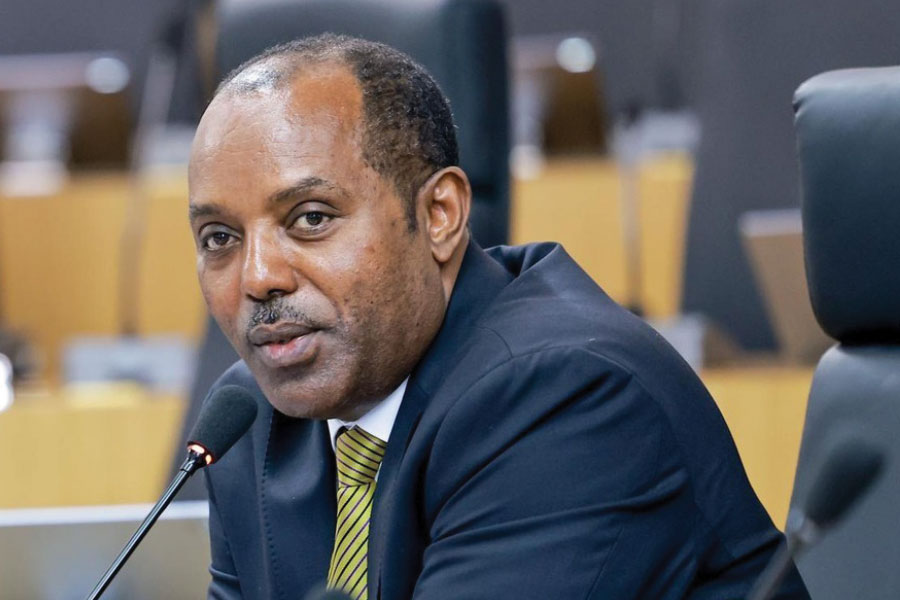
According to Awash’s President, Tsehay Shiferaw, who has run the Bank for the last 15 years, such moves are not incidental but reflect strategic foresight. He attributed the results to a disciplined approach that balanced growth and prudence. Tsehay, a veteran who started his career at the Commercial Bank of Ethiopia (CBE) and graduated from Addis Abeba and Greenwich universities, has led Awash through multiple cycles, each time pushing it further up the industry ladder.

Profit after tax rose by 10.9pc to 8.67 billion Br, representing a modest improvement compared to previous years but, according to Tsehay, a noteworthy success given the credit growth caps imposed by the Central Bank and trying economic conditions. 

IT’S STILL BETTER THAN THE OTHER INVESTMENTS I MADE.

“It wasn't the same,” he told Fortune.

Even with a substantial capital injection of five billion Birr in one year, equal to the Central Bank’s minimum threshold for commercial banks by 2026, Awash Bank maintained earnings per share (EPS) well above the industry average. Although its EPS declined by 15.6pc during the year, it remained about 17 percentage points above the industry mean of 31.6pc.

addis fortune finance

Total revenues reached 36.6 billion Br, a hefty 27pc jump from the preceding year. Interest on loans, advances, Central Bank bonds, and other deposits surged by 24.8pc to 27.36 billion Br. Non-interest income sources also saw healthy growth. Fees and commissions rose by 34.9pc to 7.57 billion Br, and foreign exchange gains, rebounding from the previous year’s dip, expanded by 37.7pc to 926.88 million Br. 

Analysts attributed the remarkable outcome to disciplined lending strategies, prudent credit risk management, and a well-diversified revenue mix in interest income, fees, commissions, and forex dealings. Together, these factors fortified Awash Bank’s bottom line against industry-wide strains.

The London-based financial statement analyst Abdulmenan Mohammed (PhD) deemed these accomplishments "impressive," particularly given the National Bank of Ethiopia’s (NBE) credit caps, which have forced private banks to find alternative revenue streams. Awash Bank’s capacity to adapt and boost non-interest earnings demonstrated its regeneration.

Profitability metrics were well against broader industry benchmarks. The Bank’s net profit margin on total assets rose to 3.14pc from three percent the previous year, beating an industry average of around 2.8pc. The gain is remarkable given the persistent inflationary pressures, constrained lending environment, and policy shifts buffeting financial institutions. Where many private banks have struggled to maintain margins, resorting to rapid loan issuance at times, Awash Bank’s measured approach and careful portfolio management have preserved its profitability. The conservative posture may prove advantageous in the medium term, as rising provisioning across the industry showed that some lenders stretched too far too fast.

However, these gains did not come without a cost. 

Total expenses climbed 35pc to 25.8 billion Br. Interest on deposits increased by 22.6pc to 7.43 billion Br, wages and benefits by 47.3pc to 13.39 billion Br, and other operating costs by 38.4pc to 5.05 billion Br. These costs remain a concern, as they account for about 65.3pc of total expenses. This rise in expenses raised concerns among analysts, with Abdulmenan cautioning that executives should remain watchful.

“The growth of expenses over the past years is concerning,” said Abdulmenan. “Executives should keep an eye.” While heavy in the short run, such a burden could pay off if Awash Bank successfully leverages human capital and operational improvements. Tsehay sees staff quality as a long-term investment, hoping to develop a more efficient, skilled workforce meeting the Bank’s strategic vision of technological advancement. As the financial sector is potentially open to foreign capital and global players, Awash Bank aspires to ensure it can compete not only on size but also on sophistication, product diversity, and customer experience. 

"Awash aims for cost optimisation while maintaining staff priority," he told Fortune, noting that the entire industry wrestles with similar payroll pressures.

His strategy focuses on digitisation, investments in efficiencyenhancing technologies, and steady branch expansion, particularly where digital platforms have yet to penetrate. The Bank opened 72 branches during the financial year, bringing its total to 947. 

Deposits per branch rose to 245.4 million Br, illustrating that the Bank’s extensive branch network yields meaningful returns. This contrasts with historical productivity struggles in the banking industry, where expansions in staffing have not always translated into proportional efficiency gains. Awash Bank’s steady improvements hint at a performanceoriented culture that links investment in personnel and infrastructure to tangible outcomes.

Productivity indicators signal progress on this front, too. Profit per employee reached 429,600 Br, surpassing the industry’s decade-long average of 79,000 Br and Awash’s own figure of 410,000 Br from the previous year. 

The Finfine Branch, a standout performer, provides an anecdote that encapsulated Awash Bank’s story. The branch outpaced many emerging private banks with a 17billion Br deposit balance, a 20 billion Br loan portfolio, and a profit of 2.5 billion Br. Its manager, Assefa Bedassa, attributed this success to resource mobilisation, customer base expansion, and strong forex generation. Recognising the branch's unique position as a notable outlet handling trading finances, including transactions on the Ethiopian Commodities Exchange, Assefa said their focus this year entails promoting retail banking, digitisation and human resource development, mirroring the Bank’s strategic plan.

The approach may appear traditional, but executives argue it matches the market reality, where branch presence still matters for trust and accessibility. Simultaneously, Awash Bank invested in core banking and omni-channel upgrades, enterprise resource planning modernisation, and interestfree banking.

Tsehay believes these moves will pay dividends as customer expectations rise, competition intensifies, and the market slowly embraces digital solutions. 

Credit management remains a critical component of Awash Bank’s performance. Provision for impairment of loans and other assets swung to a positive 102.31 million Br from an expense of 242.92 million Br the previous year. Tsehay attributed this turnaround to reduced non-performing loans (NPL); he believes the provision is still one of their main risk management strategies. Rigorous standards, coupled with disciplined lending, helped Awash Bank keep its credit quality intact despite the Central Bank’s credit cap.

While interest-driven revenue accounted for about 75pc of total income, Awash Bank’s low non-performing loan ratio, below the regulatory threshold of five percent, illustrated its disciplined credit culture. The Bank’s cautious stance may, in the long run, yield higher returns relative to competitors who rushed to expand their loan books. The environment has rewarded a measured approach, when liquidity tightens, and the regulatory burden mounts.

One of the first-generation private banks, Awash’s origins trace back to 1994, when 486 founding shareholders raised an initial 24.6 million Br in equity. It now counts more than 10,000 shareholders.

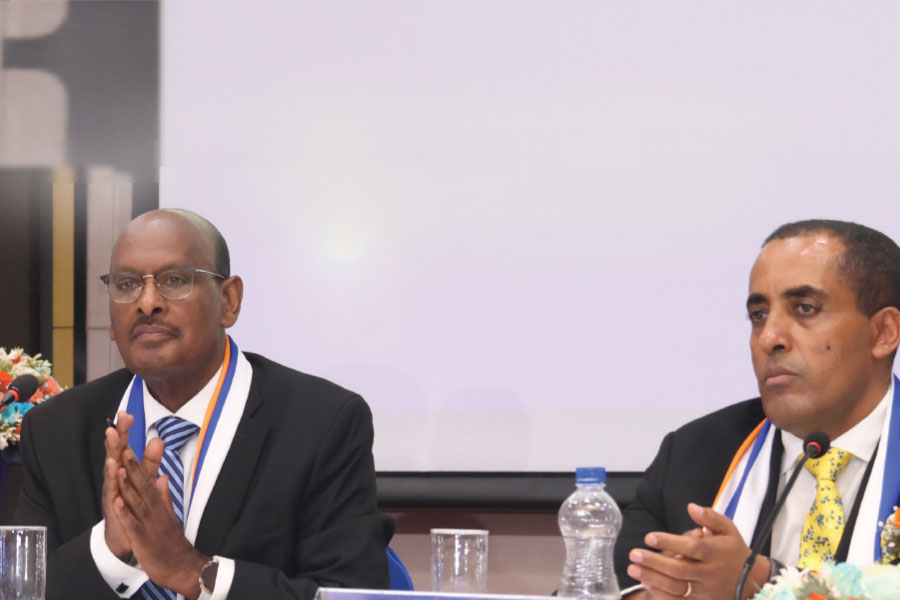
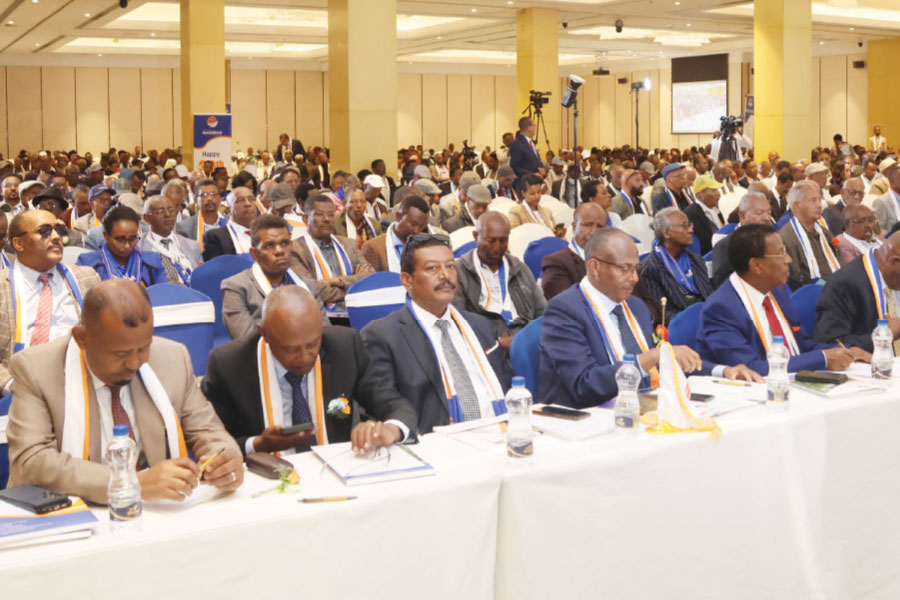
Among them is longtime shareholder Dawit Gezahegn, who attended the annual general assembly at Skylight Hotel. Although the Bank’s earnings per share have dipped, Dawit considers Awash to be outperforming others. 

“It’s still better than the other investments I made,” he told Fortune.

He plans to recapitalise his dividend, a decision rooted in his belief that Awash Bank’s current challenges are more caused by external factors than internal weaknesses. 

According to Tsehay, the trust and confidence of shareholders like Dawit, emphasising the importance of maintaining solid relationships, ensures shareholders' satisfaction.

"It's critical for future growth, making recapitalisation smoother and strengthening the Bank’s foundation," he said. 

Infrastructural development has not been overlooked. Board Chairperson Gure Kumssa told shareholders about securing a title deed for a 10,500Sqm headquarters building site at Ras Mekonnen Avenue, opening a project management office there, and purchasing three branch office buildings. Ongoing construction projects at seven sites in Oromia Regional State and Dire Dawa city demonstrate Awash Bank's resolve to anchor its growth in tangible assets. Owning real estate not only strengthens the Bank’s asset base but may also provide stability during times of economic uncertainties.

Total assets expanded by 25.9pc to 282.41 billion Br, surpassing Dashen’s 183.72 billion Br and Abyssinia’s 222.3 billion Br. Its loans and advances, including interest-free financing,rose by 13.8pc to 181.33 billion Br. Abdulmenan praised the executives' ability to expand lending despite the credit caps. Awash Bank ramped up its investment activities as lending slowed to address the impact. Investment in treasury bills (T-bills), maturing in three months, jumped to 15.8 billion Br from 1.4 billion Br a year ago, a portfolio shift which offered the bank liquidity and stable returns when traditional lending options tightened.

Related Posts

addis-fortune-finance

ZamZam Bank's Profit Soars, But High Liquidity Looms Large

Z amZam Bank demonstrated measured growth and cautious risk management, placing it in a strong position within the niche Sharia-co...

addis-fortune-finance

Coop Bank Battles Profit Slump as Digital Vision Encounters Economic Headwinds

Cooperative Bank of Oromia (Coop Bank) finished a demanding year in 2023/24, holding on to moderate profitability and widening its...

addis-fortune-finance

Abay Bank's Revenue Soars, Profit Margins Feel the Squeeze in Costly Growth Push

Abay Bank has racked up noteworthy expansions in deposits, assets, and overall revenue. Yet its impressive growth trajectory conta...

Download Vol. 2 For Free

Experience the full story in our exclusive digital edition. Addis Fortune Finance – Volume 2 takes you inside the defining moments of Ethiopia’s banking year. From record-breaking profits to emerging risks, this issue offers in-depth analysis, data-driven insights, and expert commentary.

Addis fortune Finance

© 2024 - 2026 Independent News & Media PLC All Rights Reserved.